

Gull Design Journal
Publish Date: 13th November, 2026
Journal Entry No. 10
the board before the build
Why every great room starts on a mood board.
A mood board isn't a pretty extra. It's the plan your whole project hangs on.
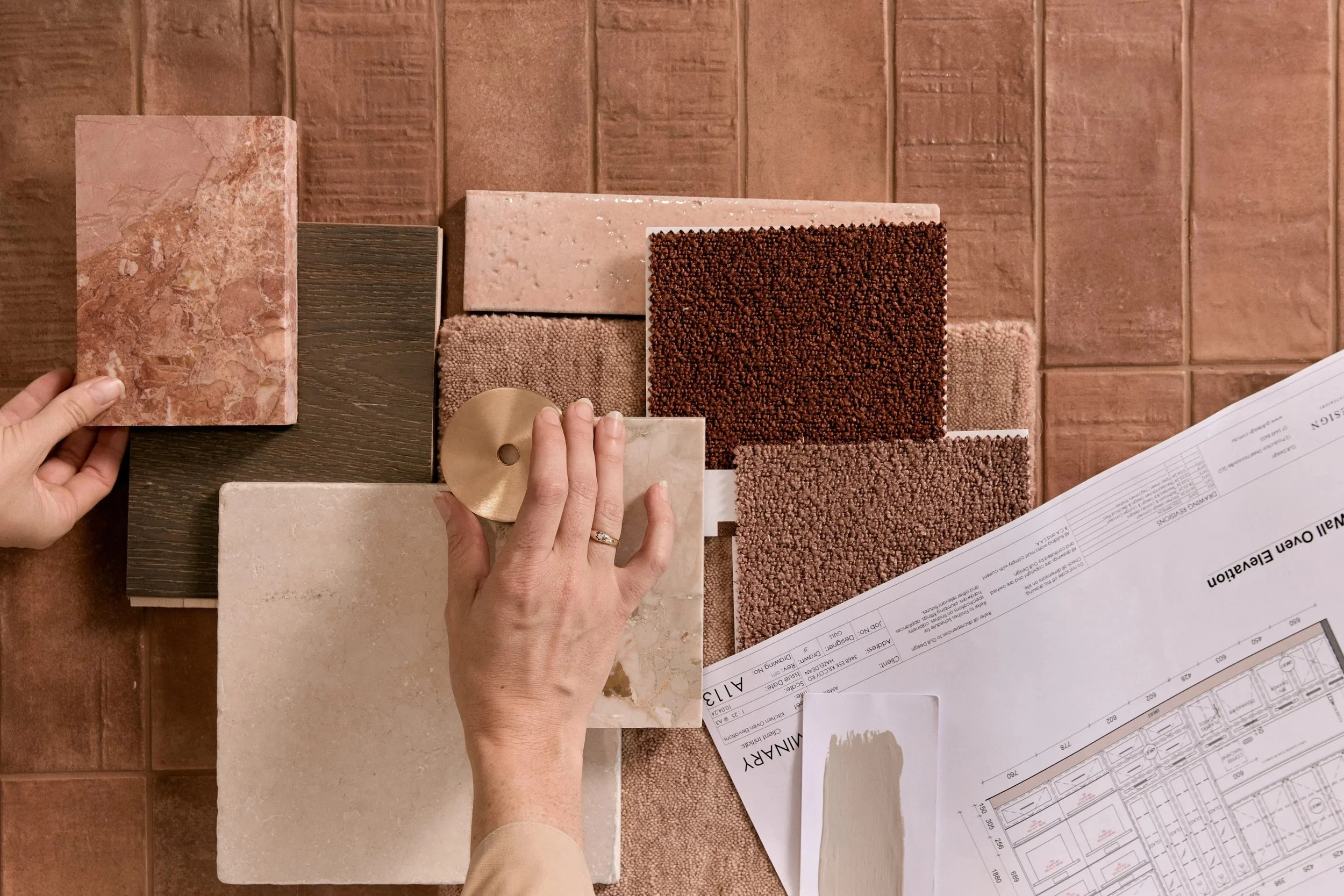
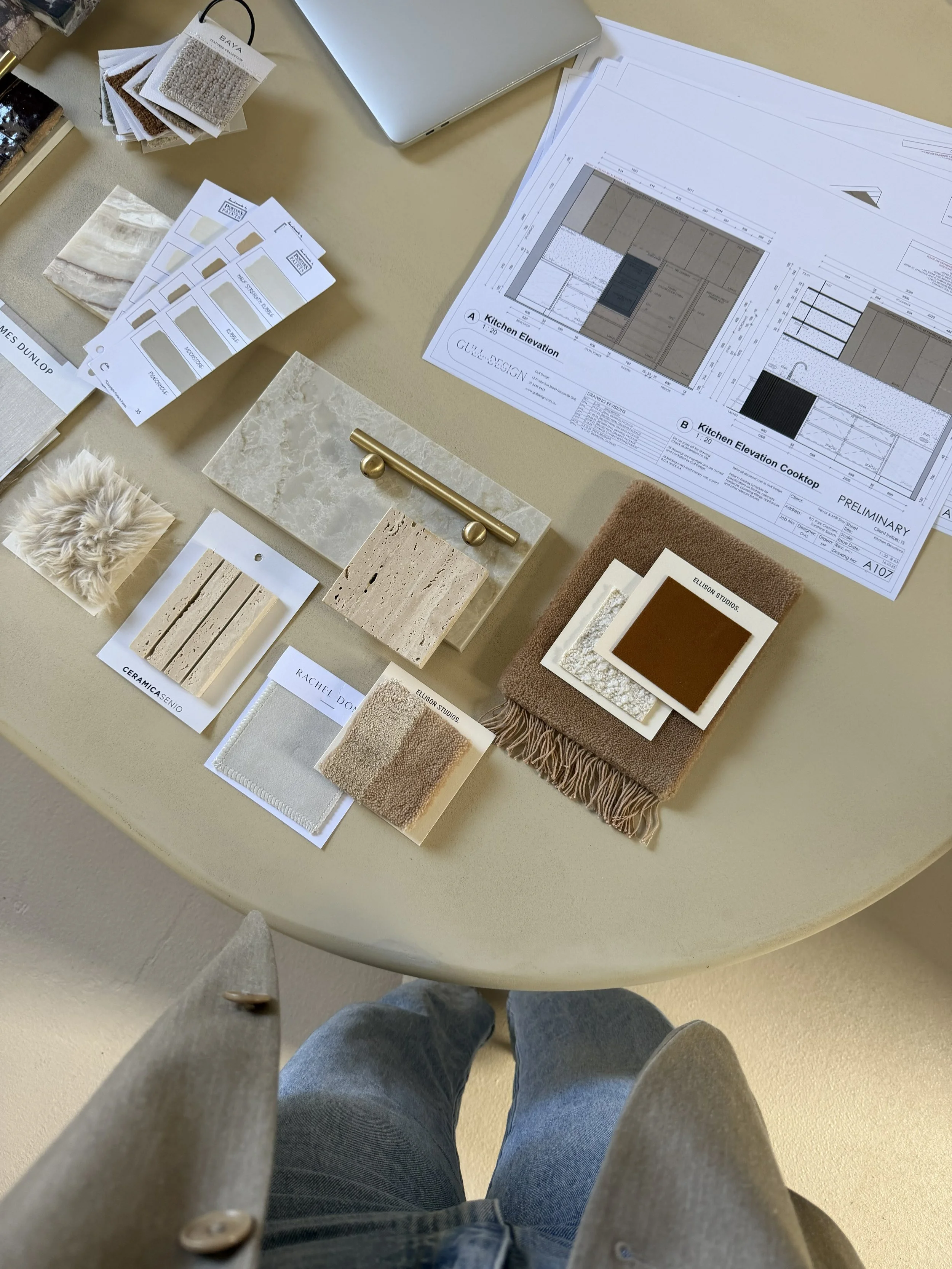
Before a single cabinet is built or a tile is ordered, there's a board on our studio table. Flooring samples. Stone offcuts. A timber veneer. A swatch of linen. A handle that caught someone's eye.
On their own, they're just pieces. Together, they're a feeling.
That's the job of a mood board.
So how do you build one that actually works? And why do we spend so much time on them?
The importance of mood boards
1. It turns a feeling into a plan
Most clients come to us knowing how they want a space to feel. Calm. Warm. Coastal, but not "beachy."
A mood board takes those words and gives them a shape, a colour and a texture.
Because "warm" means something different to everyone.
A build has a lot of voices. You, us, the builder, the joiner, the stone supplier.
The board is the one reference everyone can point to. It makes feedback specific. "Less of that, more of this" is far easier than a vague "not quite."
2. It keeps everyone on the same page
3. It stops expensive second-guessing
It's much cheaper to swap a sample on a board than a benchtop in a kitchen.
When every choice is tested against the board first, decisions stick. Fewer changes. Fewer surprises. Less regret.
Halfway through a project, it's easy to fall for something new.
The board is your reminder of the original vision. If a new piece doesn't sit with it, it probably doesn't belong.
4. It holds the line when the options pile up
How we build a mood board
Start with three words.
Before you look at a single sample, write down three words for how the room should feel.
Those words become your filter. Every piece has to earn its place against them.
Find your anchor.
Every board needs one hero. A stone slab, a timber, a piece of art, even a family heirloom.
Build everything else around it.
Go physical.
Screens lie. Colours shift, textures flatten, and a matte finish can look glossy online.
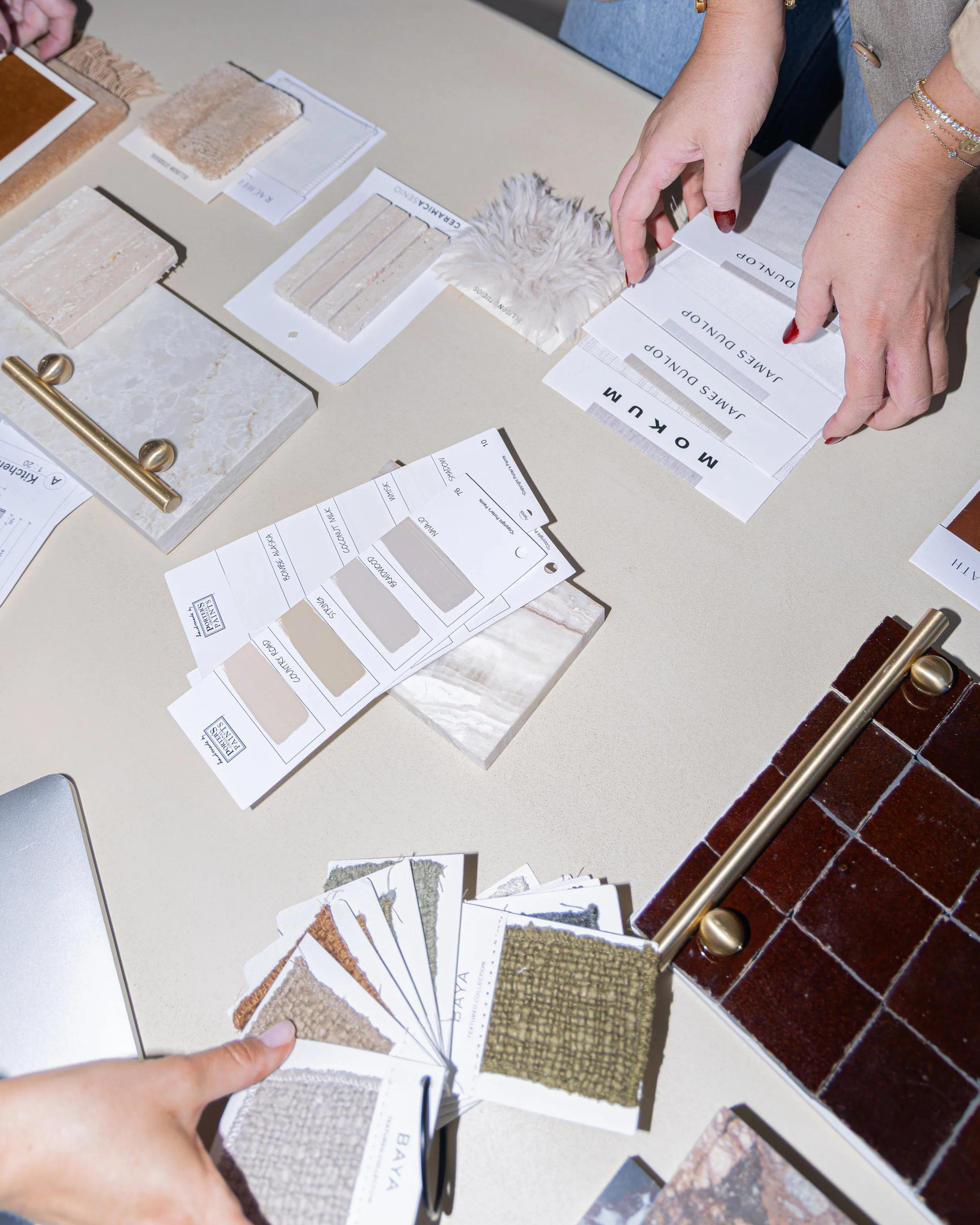
Real samples, in real light, in the actual room, tell the truth. Pinterest is for inspiration. Samples are for decisions.
Layer, then edit.
Pull together more than you need. Then take away.
If something is fighting for attention, it goes. A good board feels considered, not crowded.
Step back.
Leave it overnight. Look at it in the morning light. Then the afternoon.
If it still feels right, you're onto something.
Top tips from our Interiors Studio
We asked the team for the one rule they always come back to.
Keeley
“Limit yourself to one statement piece per board. Let everything else support it."
Alex
“. Keep a 'maybe' pile. Some of our best boards came from a sample we nearly left out."
Taylor
"Test every sample in the room it's going into, at different times of day"
Bryanna
"Always work from the flooring up. The floor is the biggest surface in the room, and it guides every material that follows. Get that right and the rest falls into place."
Final Thoughts…
A mood board is where a home starts to feel real.
It's not about finding the perfect sample. It's about how every piece speaks to the next.
Get the board right, and the build has a clear path.